Welcome to Mondince Bike - A well-known factory specialized in produce carbon bike frame and other parts since 2007.


Super Light Aero Road Bike Frame
Ever felt like you were pedaling through wet cement? That slow, grinding feeling as you ride into a headwind, or the leg-burning struggle of climbing a steep hill, is an experience every cyclist knows. These challenges aren't just in your head; they’re caused by the two biggest forces working against your ride: the constant pull of gravity and the relentless push of wind resistance.
To fight back, bike designers have focused on two magic words: “light” and “aero.” A lightweight frame is the weapon against gravity—just as climbing stairs is easier with an empty backpack, pedaling a lighter bike uphill saves you precious energy. Meanwhile, an “aero” frame is designed to conquer the wind, using specially shaped tubes that slice through the air to help you go faster without pedaling harder.
For years, cyclists often had to choose between a feathery lightweight climbing frame and a slippery aero frame built for flat-out speed. The ultimate goal, however, has always been to combine them. This is the quest behind the modern super light aero road bike frame: to build a machine that feels effortless on the climbs and flies on the flats, creating a perfect all-around bike for non-racers and pros alike.
Why a Lighter Frame Feels Like Cheating on Hills
Every pedal stroke on a steep hill feels like a battle against gravity. You aren't just lifting your own body weight—you're lifting the bike, too. Imagine climbing a long flight of stairs with an empty backpack versus one loaded with textbooks. The difference in effort is obvious. A lighter bike frame works the same way; with every push on the pedals, you're lifting less total weight, which makes the climb feel significantly easier and saves your energy.
This obsession with shedding grams is why a top-tier lightweight climbing frame is almost always built from carbon fiber. So, how much does a carbon aero frame weigh? High-performance frames can weigh less than two pounds—lighter than a carton of milk. By shaving weight from the bike’s core skeleton, engineers give the rider a direct and noticeable advantage against the constant pull of gravity, turning a grueling ascent into a more manageable challenge.
But just being light isn’t enough. The frame also needs to be incredibly stiff. If it were flimsy, it would bend and flex with each powerful pedal stroke, wasting your precious energy. The engineering magic lies in creating a frame that is both feather-light and rock-solid, ensuring every bit of your effort goes into moving you forward. This perfect balance saves you energy for the final push to the top. But what happens when the road flattens out and your main enemy is no longer gravity, but the wind itself?
How Special Frame Shapes Give You "Free" Speed on Flat Roads
Once the road levels out, gravity takes a backseat and a new opponent takes its place: the wind. You’ve felt it before—that invisible wall you have to push through, even on a perfectly flat road. The faster you try to go, the harder the wind pushes back. This is where a bike’s “aero” design makes a huge difference, and it’s all about shape.
This invisible force is called aerodynamic drag. For a simple analogy, think of sticking your hand out of a moving car’s window. If your palm is flat against the wind, you feel a powerful force pushing it back. But if you turn your hand sideways, like a blade, it cuts through the air with ease. Traditional round bike tubes act like that flat palm, causing turbulence and slowing you down. The principles of aerodynamic tube shaping explained simply are about making the bike more like the blade of your hand.
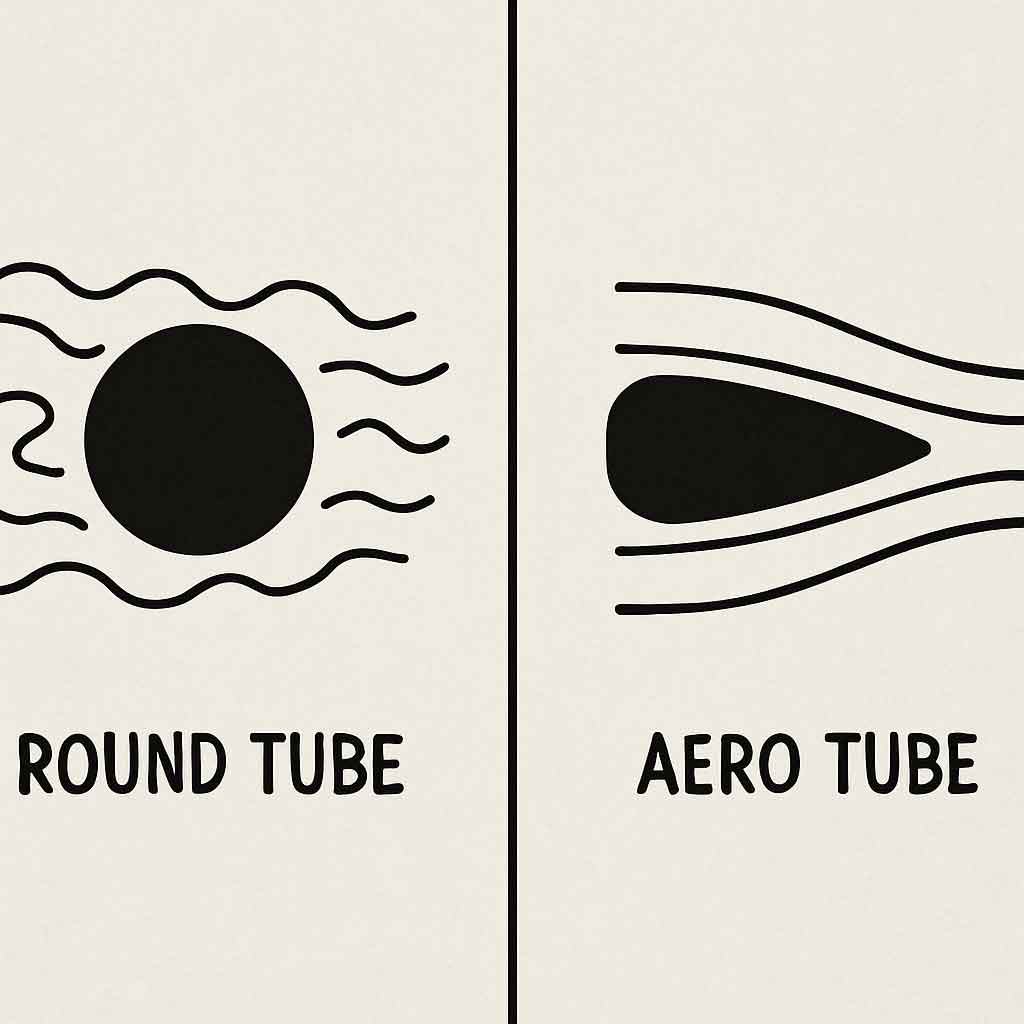
To solve this, bike designers have reshaped the frame’s tubes from simple circles into teardrop or flattened profiles, similar to an airplane wing. These shapes allow air to flow smoothly around the frame instead of crashing into it. Engineers even use powerful simulations, a process known as computational fluid dynamics in cycling, to digitally sculpt and test these shapes before a single piece of carbon is laid. This helps answer the question of is an aero or lightweight bike faster: on flat ground, the aero bike has a clear advantage.
But making a bike slipperier through the air isn't so simple. Those advanced, wing-like shapes often require more material and more complex construction than a simple, lightweight round tube. This creates a fascinating engineering puzzle: how do you make a bike slice through the wind without packing on the pounds you worked so hard to shed for the climbs?
The Big Design Challenge: Why a Bike Can't Easily Be Both Light and Slippery
These two main forces—gravity on the hills and wind on the flats—create a fundamental dilemma for bike designers. Making a frame more aerodynamic with those special wing-like shapes requires more material, which adds weight. But shedding every possible gram to make it lighter often means using simple, round tubes that are less aerodynamic. It’s like a chef trying to invent a dessert that is both incredibly rich and has zero calories—a true engineering puzzle.
This is why, for years, road bikes were often specialists. A lightweight climbing frame would have skinny, almost skeletal-looking tubes to be as featherlight as possible for mountain ascents. In contrast, a pure aero frame would feature deep, sculpted tubes that looked fast standing still, accepting a weight penalty to gain an edge against the wind on flat roads. Choosing one meant compromising on the other, a key decision in how to choose a road bike frameset.
So, the ultimate goal—the holy grail of modern bike design—is to crack this code. How can you build a frame that has the slippery shapes of an aero bike but the feathery weight of a climbing machine? Achieving these seemingly opposite goals at the same time is what makes a "super light aero" frame so advanced, and so expensive. The secret to solving these trade-offs between aerodynamics and weight isn't just about shape, but about the material itself.
Carbon Fiber: The "Magic" Material That Makes the Dream Possible
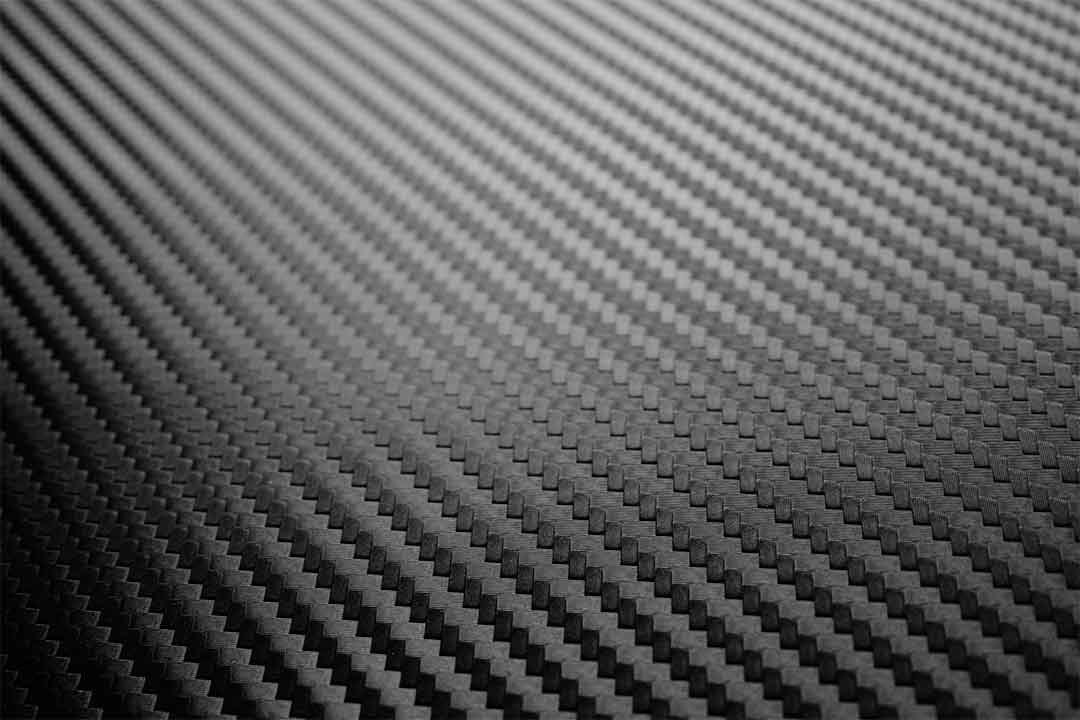
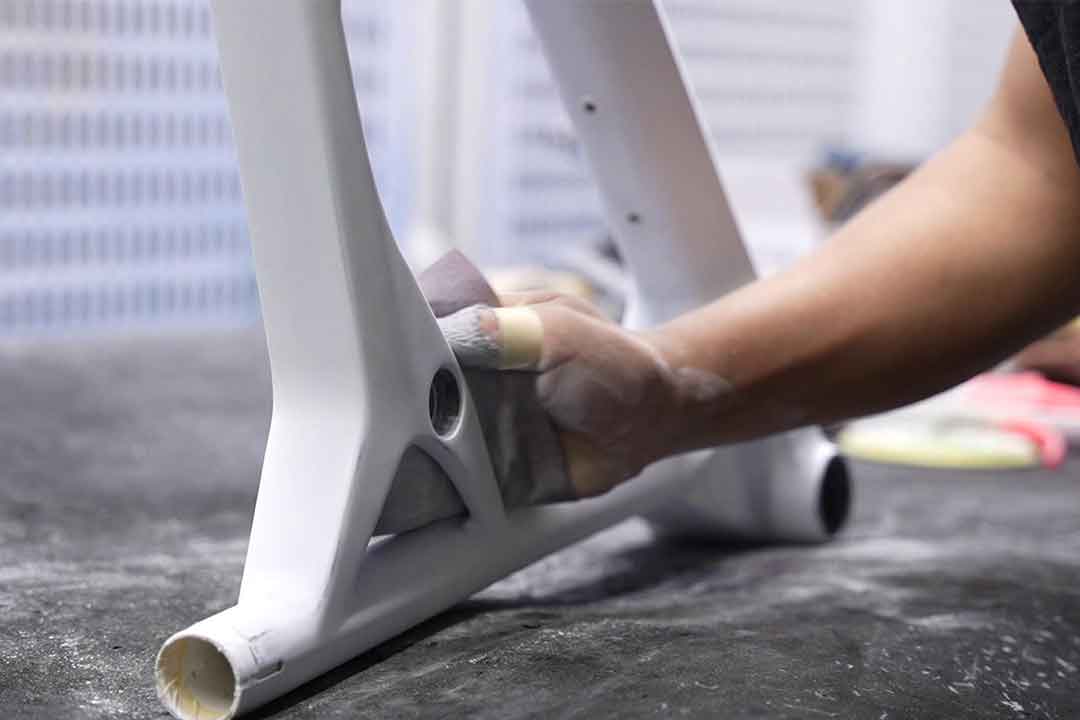
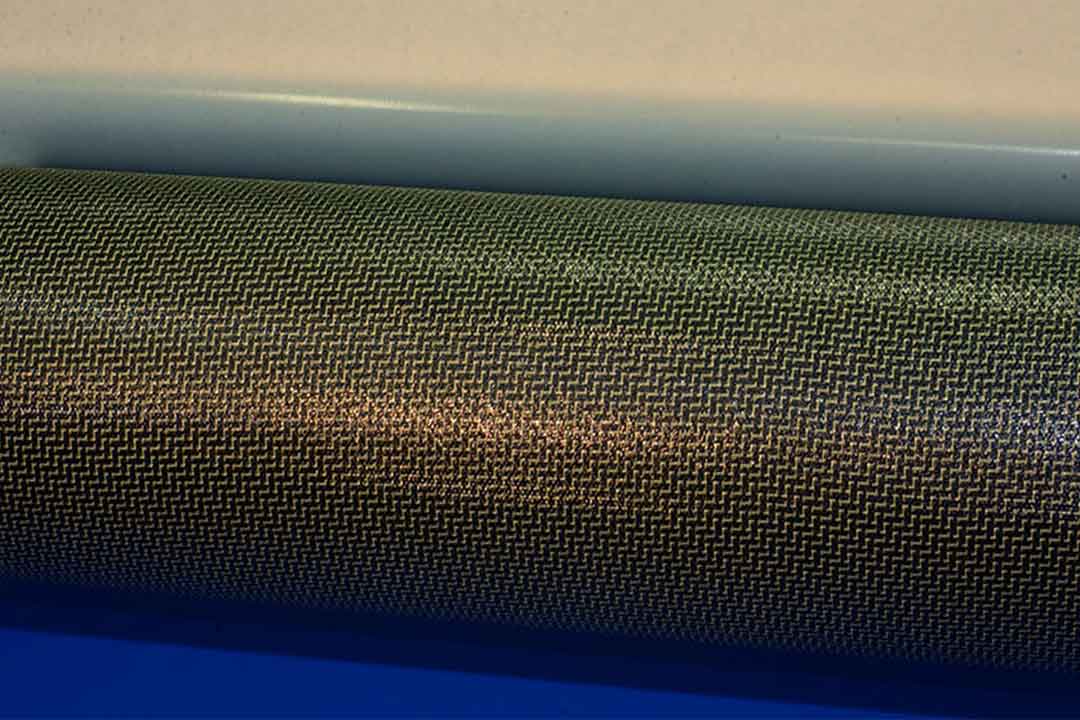
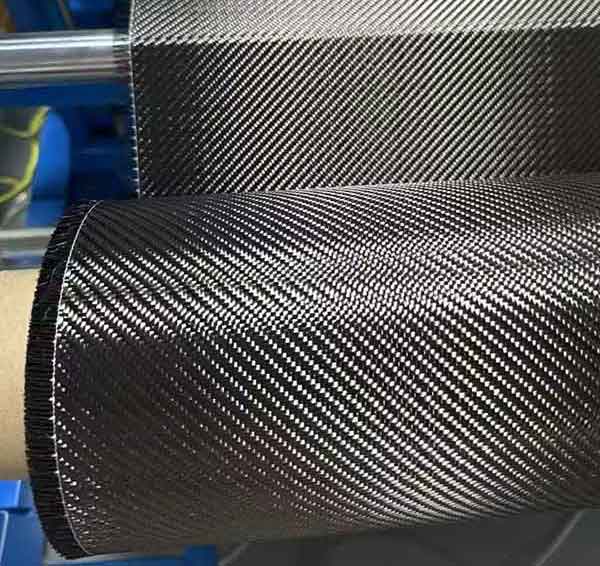
The answer to this engineering puzzle lies in a material that acts less like metal and more like high-tech clay: carbon fiber. Instead of starting with pre-formed tubes, designers work with cloth-like sheets of carbon threads. These flexible sheets are strategically placed into a mold—much like shaping paper-mache—and then hardened with resin in a high-pressure oven. This process gives designers almost total control over the final shape and thickness of every part of the frame.
This moldability is the game-changer. It allows engineers to create those complex, aerodynamic tube shapes without the limitations of bending metal. More importantly, the carbon fiber layup for bike frames can be precisely controlled; they can add extra layers for strength in high-stress areas (like where the pedals connect) and use fewer layers where a little flex is desired for comfort. This means no wasted material and no unnecessary weight. It’s the ultimate way to put strength exactly where you need it and nowhere else.
As a result, you get a material that is both stronger and significantly lighter than steel or aluminum. The high modulus carbon frame benefits from using more advanced, stiffer versions of this carbon fabric to achieve incredible performance. So, how much does a carbon aero frame weigh? It can be shockingly little—sometimes barely over two pounds (or about one kilogram). By being both moldable and incredibly light, carbon fiber finally allows designers to sculpt a frame that is both slippery through the wind and a feather on the climbs, solving the great trade-off.
Spot the Difference: How to See Aerodynamics on a Bike Frame
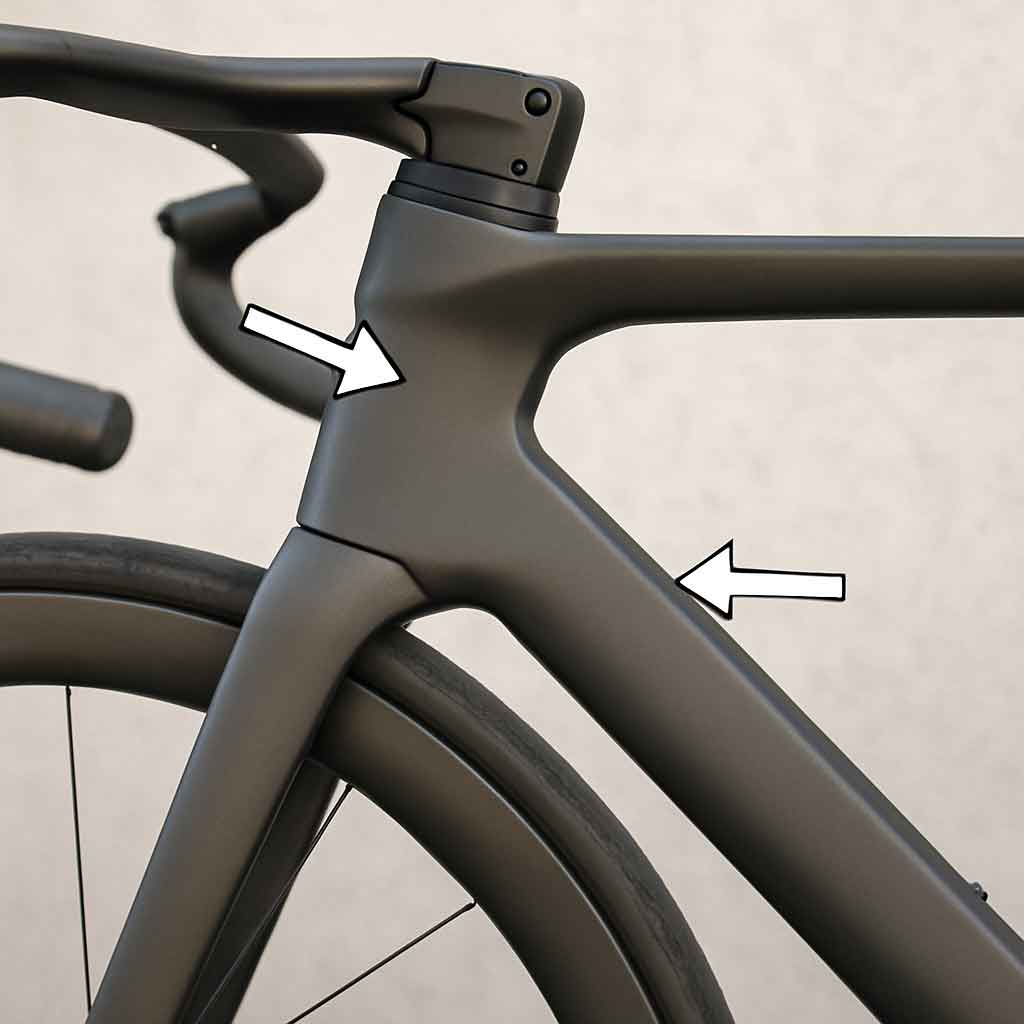
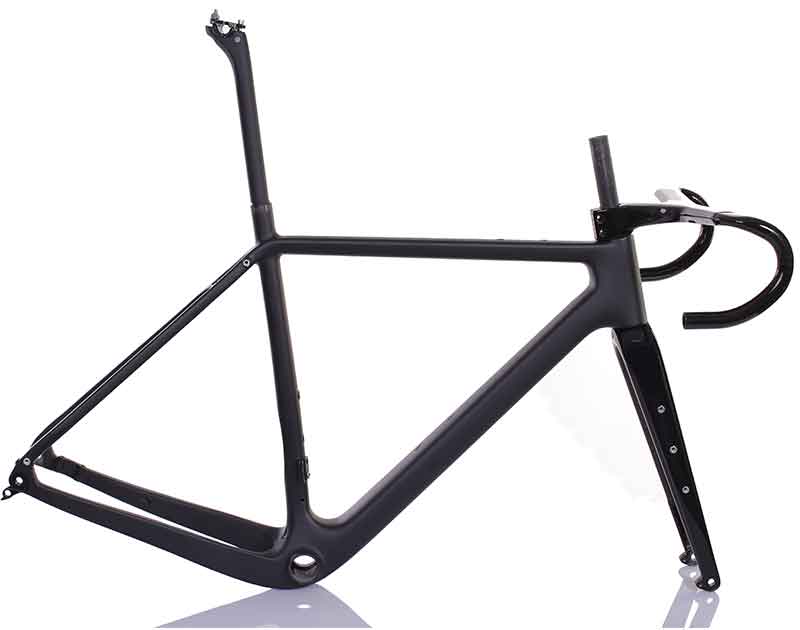
So, how can you tell an aero bike from a regular one just by looking at it? The biggest giveaway is the shape of the tubes. While a traditional bike often uses round tubes that look a bit like plumbing pipes, an aero frame uses tubes that are deeper and flatter. As you can see in the photo, these profiles—shaped like a teardrop or the cross-section of an airplane wing—are designed to slice through the air instead of bluntly pushing it aside. This is the core idea behind aerodynamic tube shaping explained: it helps you maintain speed with less effort.
This design philosophy extends beyond the main frame. Take a look at the seatpost, which is the tube that holds the saddle. On an aero bike, it’s rarely round. Instead, it’s shaped to match the frame, continuing that slippery profile to better manage airflow. An aero bike for non-racers still provides a real advantage here, because saving energy against the wind is helpful for any rider trying to go a little farther or faster.
Once you start noticing these non-round, sculpted shapes, you can easily identify a bike built for speed. It’s this obsessive attention to detail that helps create even the lightest UCI approved road frames used by professionals. But the frame is just part of the story. If you look even closer at these fast bikes, you might notice that something else seems to be missing…
Why Handlebars and Wires Disappear on Fast Bikes
That “missing” something is often a messy tangle of wires. On older or simpler bikes, you’ll see brake and gear cables looping from the handlebars down to the frame. But a modern aero bike tucks them away. The cables run inside the handlebars, through the stem (the part connecting the handlebar to the frame), and directly into the frame itself. This clean setup, often called an “integrated cockpit,” makes the handlebar and stem look like one sleek, seamless piece.
This meticulous approach highlights a key principle: a fast bike is a complete system. While a frame with wing-shaped tubes is a great start, exposed cables act like tiny, drag-inducing parachutes, disrupting the smooth airflow you’re working so hard to maintain. The benefits of an integrated cockpit system are therefore twofold: it creates a beautifully clean look and, more importantly, it reduces wind resistance. It’s a perfect example of how every single detail is scrutinized to save energy and gain speed.
Ultimately, creating a fast bike is about looking at the entire machine, not just its skeleton. This system-level thinking is what transforms a collection of parts into a truly efficient super light aero road bike frame. The best all-around road bike frameset will balance this obsessive aerodynamic integration with the low weight needed for climbing hills. This brings us to a classic debate among cyclists.
The Million-Dollar Question: Is a Lighter or More Aero Bike Faster for You?
This leads to the ultimate debate: if you had to choose, what actually makes you faster—shedding weight or cheating the wind? For decades, cyclists and designers have argued over this very question. A feathery light bike feels amazing when you lift it, but an aerodynamic one promises free speed on flat roads. The truth is, one isn't universally better than the other; the right answer depends entirely on how and where you ride.
Here's a simple rule of thumb: the faster you go, the more wind you have to push out of the way, so aerodynamics become your best friend. Conversely, when you’re crawling up a steep hill, your biggest enemy is gravity, not wind resistance. On those slow, grinding climbs, every ounce you don't have to haul upward makes a noticeable difference. So, is an aero or lightweight bike faster? It’s a matter of speed and terrain.
This is exactly the problem the best all-around road bike frameset is built to solve. Instead of forcing a rider to choose between a bike for climbing and a bike for flat ground, the "super light aero" frame aims to be great at both. It’s light enough to feel quick and responsive on the hills but shaped smartly enough to give you a significant advantage when battling a headwind or cruising at speed.
Ultimately, knowing how to choose a road bike frameset starts by thinking about your own typical ride. Do you live in a flat area where you want to hold a high speed, or are your weekends spent seeking out hilly routes? By being good everywhere, the modern super-bike offers a versatile solution, blending these two competing philosophies into one highly capable machine.
What This Super-Bike Tech Means for Your Everyday Ride
Before, the world of high-end bikes may have been a blur of confusing terms. Now, you can look at a modern road bike and see the story it’s telling—a battle against both gravity and wind. This new knowledge is the first step in learning how to choose a road bike frameset that’s right for you, even if you’re a non-racer.
This technology isn't just for the pros. Like safety features from race cars, the lessons from today's superbikes will shape the bikes we all ride tomorrow. The benefits of an integrated cockpit system and advanced frame shapes on an elite machine will make a future aero bike for non-racers more efficient and enjoyable.
So the next time you see a sleek road bike, you’ll see more than a frame; you'll see the science of speed. You now know the ultimate goal of all this engineering isn't just to win races—it's to make every pedal stroke feel a little more effortless and a lot more fun for everyone.






 Jack Ding

