
Bike Components & Parts Guide – How to Choose and Build Your Dream Bike
The right bike components and parts can transform your riding experience. Whether you are building a custom bike from the frame up, upgrading a beloved frameset, or simply trying to understand the hundreds of options on the market, this guide covers everything you need to know. From groupsets and wheels to bottom brackets and handlebars, we explain the standards, trade-offs, and what works best for road, gravel, MTB, and everyday riding.
⚡ Quick Navigation
➡️ Groupset Guide (Shimano, SRAM, Campagnolo)
➡️ Wheels & Tires | Drivetrain (Cranks, Cassette, Chain)
➡️ Brakes – Mechanical vs Hydraulic vs Rim | Bottom Brackets – BSA, T47, BB86
➡️ Seatposts – Diameters, Materials & Suspension | Handling – Stems, Handlebars & Headsets
➡️ Fixed Gear & Singlespeed Components
➡️ Mondince Component Standards – 1.3 Times ISO 4210
➡️ FAQ
Groupset Guide – The Heart of Your Bike
The groupset (drivetrain + brakes) is the most important component system on your bike. It determines how smoothly you shift gears, how reliably you stop, and how much the complete build weighs. The three major players are Shimano, SRAM, and Campagnolo, each offering a tiered range of groupsets at different price points.[reference:0]
Shimano Road / Gravel Groupset Hierarchy
| Groupset | Tier | Speed | Approx. Weight | Best For |
|---|---|---|---|---|
| Dura-Ace R9200 | Ultimate race | 12-speed Di2 electronic | ~2.3 kg | Elite racing, weight weenies |
| Ultegra R8100 | Performance race | 12-speed Di2 electronic | ~2.6 kg | Serious club racers, gran fondo riders |
| 105 R7100 | Entry race / enthusiast | 12-speed Di2 electronic | ~2.9 kg | Sportives, fast recreational riding |
| Tiagra 4700 | Recreational | 10-speed mechanical | ~3.2 kg | Commuting, touring, budget road builds |
| Sora / Claris | Entry | 9-speed / 8-speed mechanical | ~3.4–3.6 kg | First road bike, budget builds |
SRAM Road / Gravel Groupset Hierarchy
| Groupset | Tier | Speed / Type | Key Feature | Best For |
|---|---|---|---|---|
| RED AXS | Ultimate race | 12-speed wireless electronic | Lightest, most aerodynamic | Elite racing |
| Force AXS | Performance race | 12-speed wireless electronic | Near-top performance at lower price | Serious club racers[reference:1] |
| Rival AXS | Entry race / enthusiast | 12-speed wireless electronic | Most affordable wireless groupset | Value electronic builds |
| Apex (AXS or mechanical) | Recreational / gravel | 12-speed mechanical or AXS | Great value, wide gear range | Gravel, touring, budget builds[reference:2] |
Key Considerations When Choosing a Groupset
- Electronic vs Mechanical – Electronic groupsets (Shimano Di2, SRAM AXS) offer faster, more precise shifts with less hand effort. They require charging but eliminate cable stretch and friction. Mechanical groupsets are simpler, lighter(than Di2 equivalents?请核对), cost less, and are easier to repair on the road.
- Speed / Number of Gears – 12-speed is now standard on road performance groupsets, with 11-speed still common on mid-range builds. 10-speed and 9-speed groupsets remain excellent budget options, with widely available replacement parts.
- Brake Type – Virtually all modern groupsets are disc-brake only at the higher tiers. If you want rim brakes, look for older generation groupsets (Shimano 105 R7000, Ultegra R8000) or lower tiers.
- Crank Length & Gearing – Most groupsets offer crank lengths from 165mm to 175mm. Choose 165‑170mm for shorter legs or knee sensitivity, 172.5–175mm for taller riders. Gearing (cassette range, chainring size) should match your terrain and fitness.
Wheels & Tires – Where the Rubber Meets the Road
Wheels are the most impactful performance upgrade for most riders. They affect acceleration, aerodynamics, comfort, and handling. Tires are the single most cost‑effective upgrade—improving both speed and comfort.
Wheel Size Choices
- 700c (622mm) – Road standard – The most common wheel size for road, gravel (and many CX bikes). Larger diameter rolls more efficiently and maintains momentum better, making it ideal for pavement, mixed terrain, and racing. 700c is the overwhelming industry standard for most drop‑bar bikes.[reference:3]
- 650b (584mm) – Gravel & adventure standard – Smaller diameter allows much wider tires (up to 2.1″) for the same frame clearance. Combined with the shorter spoke length, 650b wheels are generally stronger than 700c.[reference:4] The smaller diameter also lowers the bike’s center of gravity, improving stability on rough terrain.[reference:5] A 650b wheel with a 47mm tire has the same outer diameter as a 700c road wheel with a 28mm tire—triple the air volume and comfort.[reference:6]
- 29″ (622mm) vs 27.5″ (584mm) – Mountain bike standard – Same diameters as 700c and 650b, but with different naming. 29″ rolls over obstacles more easily, while 27.5″ accelerates faster and is stronger.
- Fat bike wheels – 26″ – Used for 4–5″ wide tires on sand, snow, and extreme terrain.
Wheel Depth & Aerodynamics
Wheel depth affects aerodynamics, weight, and cross‑wind stability:
- Shallow wheels (25‑35mm) – Lightest, best for climbing, most stable in crosswinds.
- Mid‑depth wheels (40‑55mm) – Best all‑around for road and gravel. Significant aero gains with manageable cross‑wind effect.
- Deep wheels (60‑80mm+) – Maximum aero advantage on flat terrain, heavier, and can be twitchy in strong winds.
Tire Width & Pressure
- Road tires – 25–32mm. Wider tires (28‑32mm) offer lower rolling resistance on rough pavement and better comfort than narrower tires.
- Gravel tires – 35–50mm. Provides traction and comfort on loose terrain.
- Mountain tires – 2.0–2.6″ (50–66mm). Wider for more grip and lower pressure.
Tubeless tires are now standard for gravel and mountain biking, and increasingly common on road bikes. They seal small punctures automatically and allow lower pressures for better traction and comfort.
Drivetrain – Cranks, Cassette, Chain
The drivetrain converts your pedaling power into forward motion. Understanding key specs helps you choose compatible and efficient components.
Cranks & Chainrings
- Crank arm length – 165mm (shorter) to 175mm (longer). Shorter cranks reduce knee strain and allow more aggressive aero positions.
- Chainring configuration – Standard (53/39), semi‑compact (52/36), compact (50/34), sub‑compact (48/32, 46/30). Compact and sub‑compact are best for climbing and recreational riding.
- 1x vs 2x drivetrains – 1x (single front chainring) is common on MTB and gravel bikes for simplicity and chain retention. 2x offers wider gear range with smaller jumps between gears, preferred on road and endurance builds.
Cassette & Gear Range
- Road cassettes – Typically 11‑30t or 11‑34t. Wide‑range cassettes up to 36t are used for steep climbing.
- Gravel/Mountain cassettes – 10‑44t, 10‑52t (SRAM) or 11‑40t, 11‑46t (Shimano). Extremely wide range for steep off‑road climbs.
- Cassette compatibility – Most modern groupsets use HG (Hyperglide) or Micro Spline (Shimano 12‑speed MTB) or XD/XDR (SRAM) freehub bodies. Always match cassette to your freehub standard.
Brakes – Stopping Power & Control
Brakes are a critical safety system. The right choice depends on your riding style, budget, and mechanical comfort.
Disc Brakes – Mechanical vs Hydraulic
| Feature | Mechanical Disc Brakes | Hydraulic Disc Brakes |
|---|---|---|
| Stopping Power | Good – cable‑actuated | Excellent – up to 30% more stopping power[reference:7] |
| Modulation | Basic (on/off feel) | Excellent – smooth, progressive power curve[reference:8] |
| Maintenance | Simple – cable changes only | More complex – requires bleeding mineral oil / DOT fluid |
| Cost | Lower entry price | Higher – both groupset and replacement parts |
| Weather Performance | Good but can fade in extended wet/muddy descents | Excellent – consistent in all conditions |
| Best For | Budget builds, touring, commuters, riders who prefer simple cable maintenance | Gravel, MTB, performance road, year‑round riders, demanding descents |
Rim Brakes – Still Relevant?
Rim brakes (caliper, cantilever, V‑brake) are simpler, lighter (for non‑disc frames), and easier for home mechanics. However, they are less powerful in wet conditions and wear down wheel rims over time. Rim brakes are still found on budget entry‑level bikes, classic frames, and some lightweight climbing builds.
Brake Rotors – What Size?
- Road / gravel – 140mm front / 140mm rear (lighter, adequate for most conditions) or 160mm front / 140mm rear (more stopping power).
- Mountain / enduro – 180mm front / 160mm rear, up to 203mm for park riding.
Bottom Brackets – The Foundation of Your Drivetrain
The bottom bracket (BB) connects the crankset to the frame. Choosing the right standard is important as the BB must match your frame, crankset, and riding style.
Mondince uses T47 threaded bottom brackets across our road, gravel, and mountain frames – a modern threaded standard that combines the stiffness and weight advantages of press‑fit with the serviceability of a threaded interface.
Bottom Bracket Standards Comparison
| Standard | Type | Advantages | Disadvantages |
|---|---|---|---|
| BSA / English Threaded | Threaded | Simple to service, creak‑free, widely available, compatible with most cranks | Narrower shell limits frame stiffness and down‑tube width |
| T47 | Threaded | Wider shell (47mm) allows larger down‑tube for aero and stiffness, threaded for easy service, compatible with 24mm (Shimano) and 30mm (SRAM) spindles[reference:9] | Requires specialty tools, fewer frame options |
| BB86 / BB92 | Press‑fit | Stiff, lightweight, wide shell (86.5mm / 91.5mm)[reference:10] | Prone to creaking over time, requires precise frame alignment |
| BB30 / PF30 | Press‑fit | Very lightweight, large bearing size improves durability, allows 30mm spindles | Creaking common, installation fussy[reference:11] |
Which Bottom Bracket Should You Choose?
- Choose BSA threaded – If you want the simplest, most serviceable standard and are not weight obsessed. Ideal for touring, commuting, and budget builds.
- Choose T47 threaded – For a modern bike that prioritizes frame stiffness, aero shaping, and serviceable bearings. The thread design means no creaking.[reference:12] Many new carbon frames (including all Mondince models) use T47.
- Choose BB86 / BB30 – If you already have a press‑fit frame and are willing to maintain it carefully. Only buy if compatibility forces you to.
Seatposts – Diameter, Material & Comfort Features
The seatpost connects your saddle to the frame, affecting ride comfort and adjustment range. Seatpost diameter must match your frame’s seat tube inner diameter.
Common Seatpost Diameters
| Diameter | Typical Use | Flex / Comfort | Availability |
|---|---|---|---|
| 27.2mm | Road, endurance, gravel, classic frames | Maximum flex (most comfortable) | Widely available – long seatpost lengths for droppers and flex posts[reference:13] |
| 30.9mm | MTB, trail bikes | Moderate flex | Common for dropper posts[reference:14] |
| 31.6mm | Modern MTB, aero road | Stiffest – minimal flex | Widely available for dropper posts |
The wider the post, the stiffer the ride. Many race frames use 31.6mm for max stiffness, while comfort‑oriented frames use 27.2mm for additional compliance.[reference:15] However, some race frames also use 27.2mm in a deliberate effort to soften the rear of the frame. [reference:16] Mondince gravel frames – FM336, FM326, FM316 – use 27.2mm seatposts for added compliance on rough terrain.
Seatpost Materials
- Aluminum seatposts – Most common, affordable, durable. Slightly stiffer than carbon.
- Carbon seatposts – Lighter, vibrates less, and can be engineered for vertical flex without compromising lateral stiffness.[reference:17] The best upgrade for long‑distance comfort on a road or gravel bike.
Dropper vs Rigid vs Suspension Seatposts
- Rigid post – Standard on most road and gravel bikes. No moving parts, lightest weight.
- Dropper post – Allows lowering saddle height on technical descents. Essential for MTB and popular on gravel bikes for singletrack sections.[reference:18]
- Suspension seatpost – Adds vertical compliance for rough pavement or gravel. Uses elastomer, coil, or air‑sprung mechanisms.[reference:19] Heavier than rigid posts but can improve comfort on very rough roads.
Handling – Stems, Handlebars & Headsets
Stem, handlebar, and headset choices dramatically affect bike fit and handling. These are the easiest components to swap for fine‑tuning your riding position.
Stem Length & Angle
Stem length is measured center‑to‑center from the steerer clamp to the handlebar clamp. Stem angle (rise or drop) is measured relative to perpendicular to the steerer tube.
- Short stem (60‑80mm) – Quicker steering response, more upright position. Common on MTB, gravel, and some endurance road bikes.
- Mid stem (90‑110mm) – Standard on road bikes. Balanced steering and position.
- Long stem (110‑130mm+) – Slower, more stable steering, more forward stretched position. Used on race bikes for aerodynamic position.[reference:20]
A positive‑angle stem (e.g., +6°, +17°) raises the handlebar for a more upright, comfortable position. A negative‑angle stem lowers the handlebar for a more aerodynamic race position. Flipping a stem changes its angle.[reference:21]
Handlebar Width & Shape
Handlebar width should roughly match your shoulder width. Bars that are too wide compromise aerodynamics and can cause shoulder fatigue. Bars that are too narrow restrict lung expansion and steering leverage.
- Road drop bars – 36‑44cm. Compact (shallow drop) are most comfortable. Traditional (deep drop) for aggressive race positions.
- Gravel drop bars – 40‑46cm, often with flared drops for better control on rough terrain.
- Flat bars / MTB bars – 660‑780mm wide. Wider for better leverage and control on technical trails.
Headsets – Threaded vs Threadless vs Integrated
The headset connects the fork to the frame and allows the handlebar to turn smoothly.
- Threaded headset (older standard) – Uses a quill stem that inserts into the fork steerer. Adjustable height but heavier and less stiff. Found on vintage bikes and some budget cruisers.[reference:22]
- Threadless headset (modern standard) – Uses a stem that clamps on the outside of the fork steerer tube. Lighter, stiffer, and easier to service than threaded designs.[reference:23]
- Integrated headset – A threadless design where the bearing cups are pressed directly into the frame’s head tube. Lighter and more aerodynamic than external cup designs.[reference:24]
Integrated Cockpits (One‑Piece Bar + Stem)
Integrated cockpits combine handlebar and stem into a single carbon unit. Advantages include reduced weight (saving 50‑90g compared to traditional bar‑stem combos), increased front‑end stiffness (15‑20% reduction in flex), and cleaner aero profiles that can save approximately 5.5 watts at 45 km/h.[reference:25][reference:26]
Disadvantages include limited adjustability (you cannot change stem length or angle without replacing the whole cockpit) and higher replacement cost if damaged.
Fixed Gear & Singlespeed Components
Fixed gear (fixie) and singlespeed bikes have surged in popularity for their simplicity, low maintenance, and unique riding experience. Here’s what you need to know:
- Fixed gear hub – The cog threads onto the hub, and a lockring tightens in the opposite direction to prevent the cog from unscrewing. There is no freewheel – when the wheel moves, the pedals move. This allows riding techniques like skid stopping and track standing.[reference:27]
- Flip‑flop hub – Has freewheel threading on one side and fixed gear threading on the other. Allows riders to switch between fixed gear and singlespeed freewheel by flipping the rear wheel.[reference:28]
- Singlespeed freewheel hub – Works like a normal bike coasting mechanism. Simpler and more intuitive for beginners.
- Track frame geometry – Requires a track fork end (horizontal dropout) for chain tension adjustment. Many conversions use chain tensioners on vertical dropouts.
For fixed gear and singlespeed builds, wheel strength matters more than weight – track sprinting and skid stopping put high torque loads on the hub and spokes.
Mondince Component Standards – 1.3 Times ISO 4210
At Mondince Cycle, we believe that high‑performance bike components and parts deserve a frame that can withstand real‑world abuse. Every frame we manufacture is independently tested to 1.3 Times ISO 4210 standards – exceeding industry safety requirements by 30%.
What does 1.3 Times mean for you? If you weigh 80 kg, you are riding a frame validated to handle stresses equivalent to a 104 kg rider under extreme conditions. Whether you are a heavier rider, loading up for bikepacking, or simply want peace of mind, that extra safety margin matters. Third‑party test reports are available upon request.
All Mondince frames are built with modern component standards:
- T47 threaded bottom bracket – Creak‑free, serviceable, compatible with both 24mm and 30mm spindles.
- UDH (Universal Derailleur Hanger) – Replaceable and future‑proof for SRAM Transmission and other next‑gen drivetrains.
- Flat‑mount disc brakes – 140mm or 160mm rotor compatibility.
- 12x100mm (front) and 12x142mm (rear) thru‑axles – Modern stiffness and safety.
- Fully internal cable routing – Clean cockpit, aero efficiency.
Frequently Asked Questions About Bike Components
What components should I upgrade first on a budget bike?
Can I mix components from different brands (Shimano + SRAM)?
What is the difference between Shimano 105, Ultegra, and Dura-Ace?
Are carbon components (bars, seatposts) worth the cost?
How often should I replace drivetrain components?
What is the warranty on Mondince frames and components?
Ready to Build or Upgrade Your Dream Bike?
Whether you are building a custom bike from the frame up, upgrading an existing frameset, or sourcing components for an OEM brand, Mondince Cycle offers premium carbon frames with modern component standards – T47 BB, UDH hanger, flat‑mount disc brakes, and 1.3 Times ISO 4210 testing. Pair our frames with your choice of groupset, wheels, and finishing kit to create a bike that is uniquely yours.
👉 Explore all Mondince carbon frames →
👉 Request a quote or custom build advice →
Related Articles
How to Use a Gravel Fork Effectively
Gravel biking has surged in popularity over recent years, captivating the hearts of cycling enthusiasts worldwide. It offers a versatile and thrilling...
Best Gravel Forks for Off-Road Adventures
Embarking on off-road adventures requires a reliable bike setup, and one of the most crucial components is the gravel fork. A well-chosen gravel fork ...
.jpg)
Gravel Fork Maintenance Tips for Longevity
Before diving into maintenance tips, it's crucial to understand the different types of gravel forks available. A gravel bike fork is designed to abs...
Top Features to Look for in Gravel Forks
When it comes to choosing the right gravel fork for your bike, the options can feel overwhelming. With so many variations and features available, how ...
Choosing the Right Gravel Fork for You
Choosing the right gravel fork for your bike can significantly enhance your riding experience, providing the right blend of comfort, control, and perf...
.jpg)
A Guide to USA-Made Bicycle Components
When it comes to purchasing a bicycle, many enthusiasts prioritize quality, craftsmanship, and origin. In recent years, there has been a growing inter...
Hunt Gravel Wheels: A Comprehensive Review
When it comes to gravel cycling, having the right wheels can make a significant difference in your ride experience. Hunt Gravel Wheels have become a p...
Upgrading Your Bike with Hunt Gravel Wheels
Upgrading your bike can be an exhilarating experience, especially when it comes to enhancing performance and riding comfort. One of the most impactful...
Hunt Gravel Wheels: Performance and Durability
Gravel cycling has surged in popularity, bringing with it a demand for specialized gear that can withstand rough terrain while providing top-notch per...
Top Features of Hunt Gravel Wheels
Gravel cycling has surged in popularity, captivating the hearts of cycling enthusiasts w...
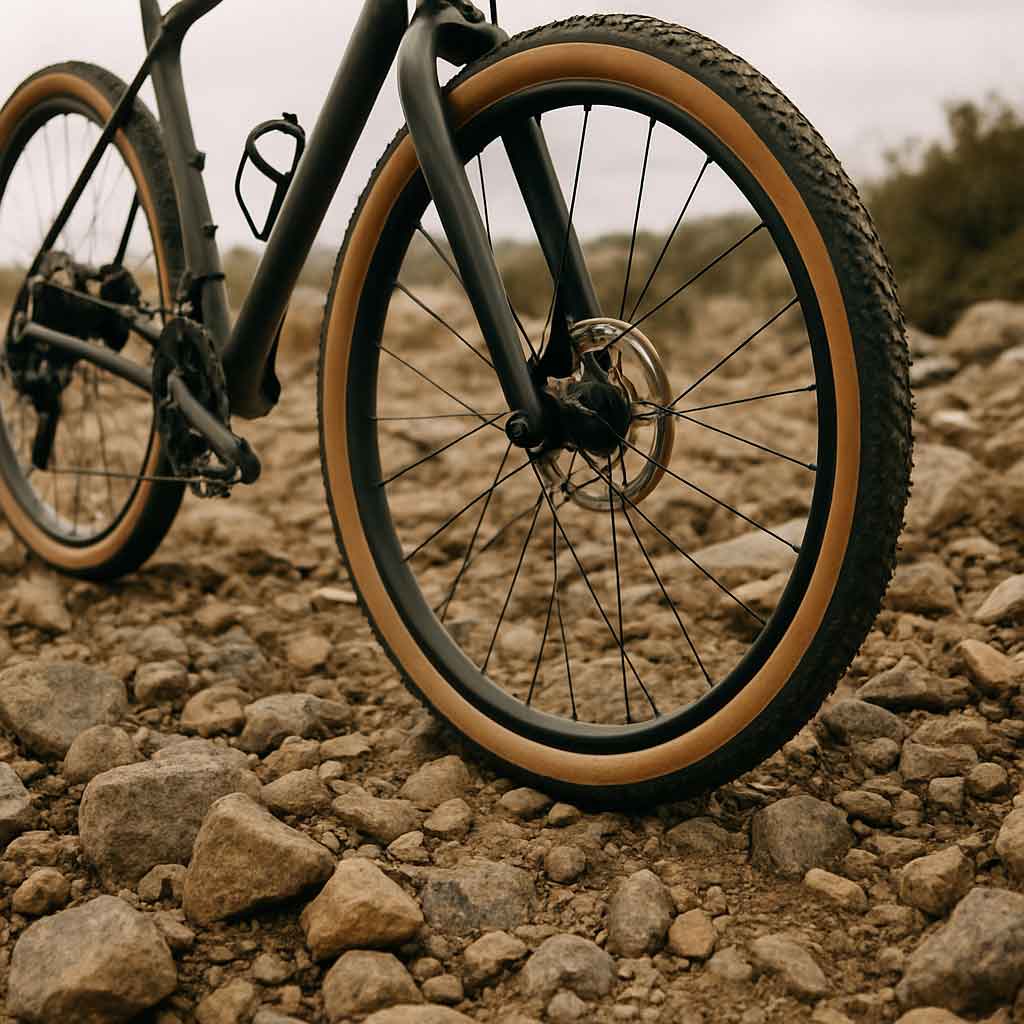
Choosing the Best Hunt Gravel Wheels
When it comes to gravel biking, having the right wheels can make all the difference. Hunt wheels have become a popular choice among gravel bike enthus...
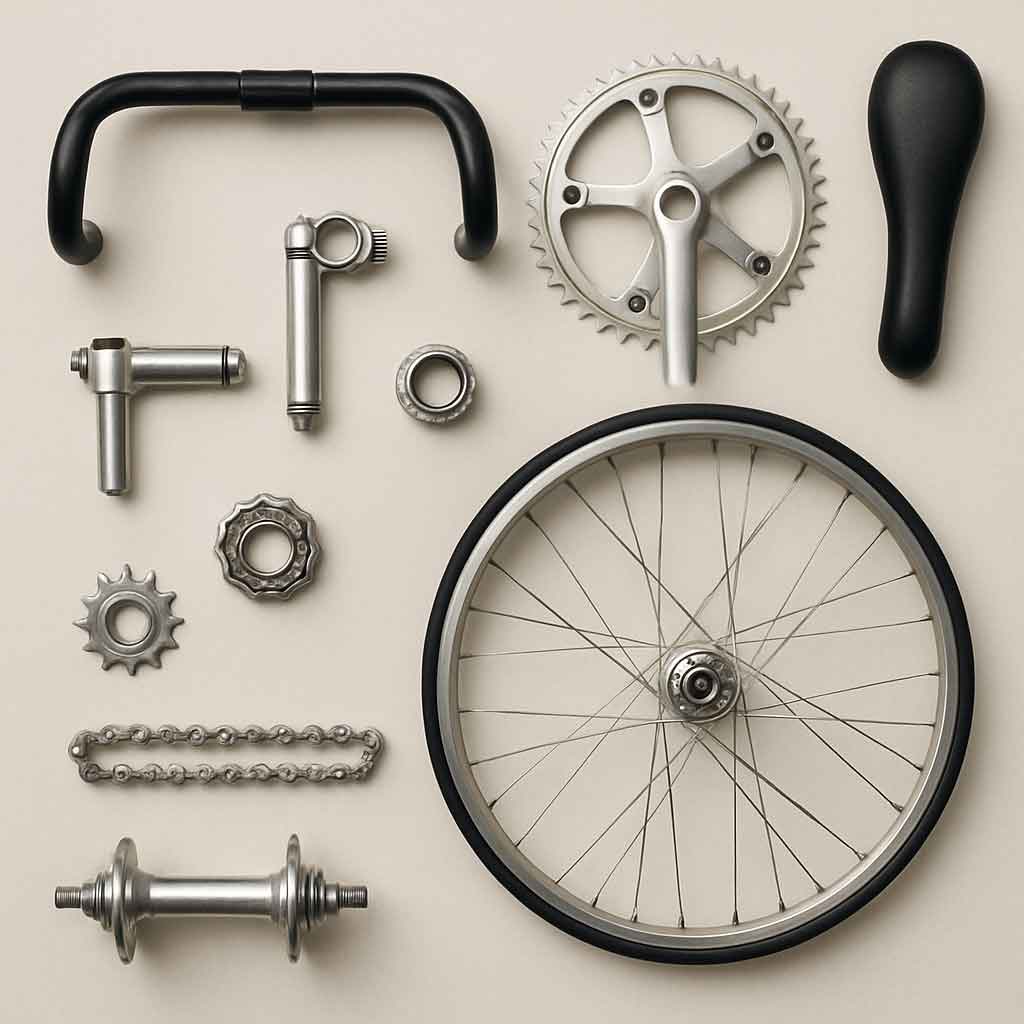
Choosing the Right Fixed Gear Components
When it comes to fixed gear bikes, often affectionately referred to as "fixies," choosing the right components can significantly enhance your riding e...