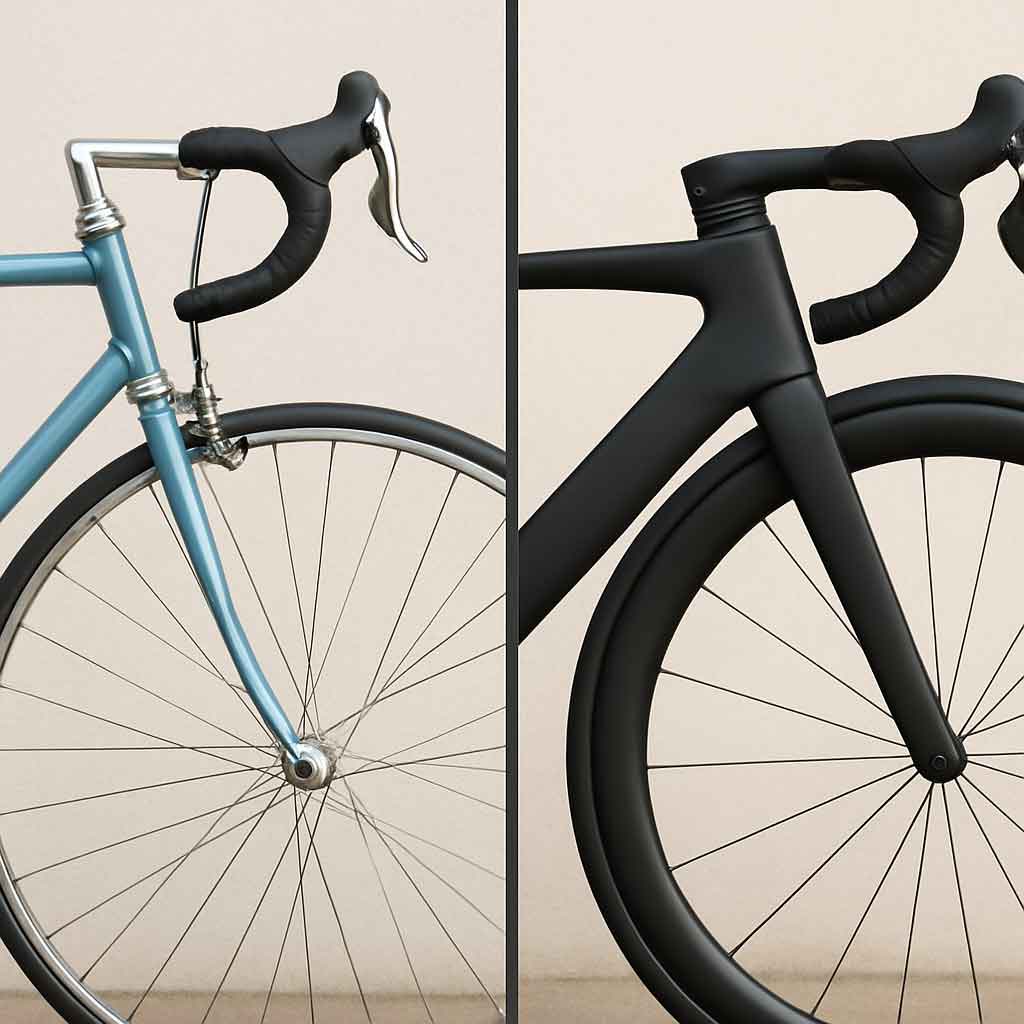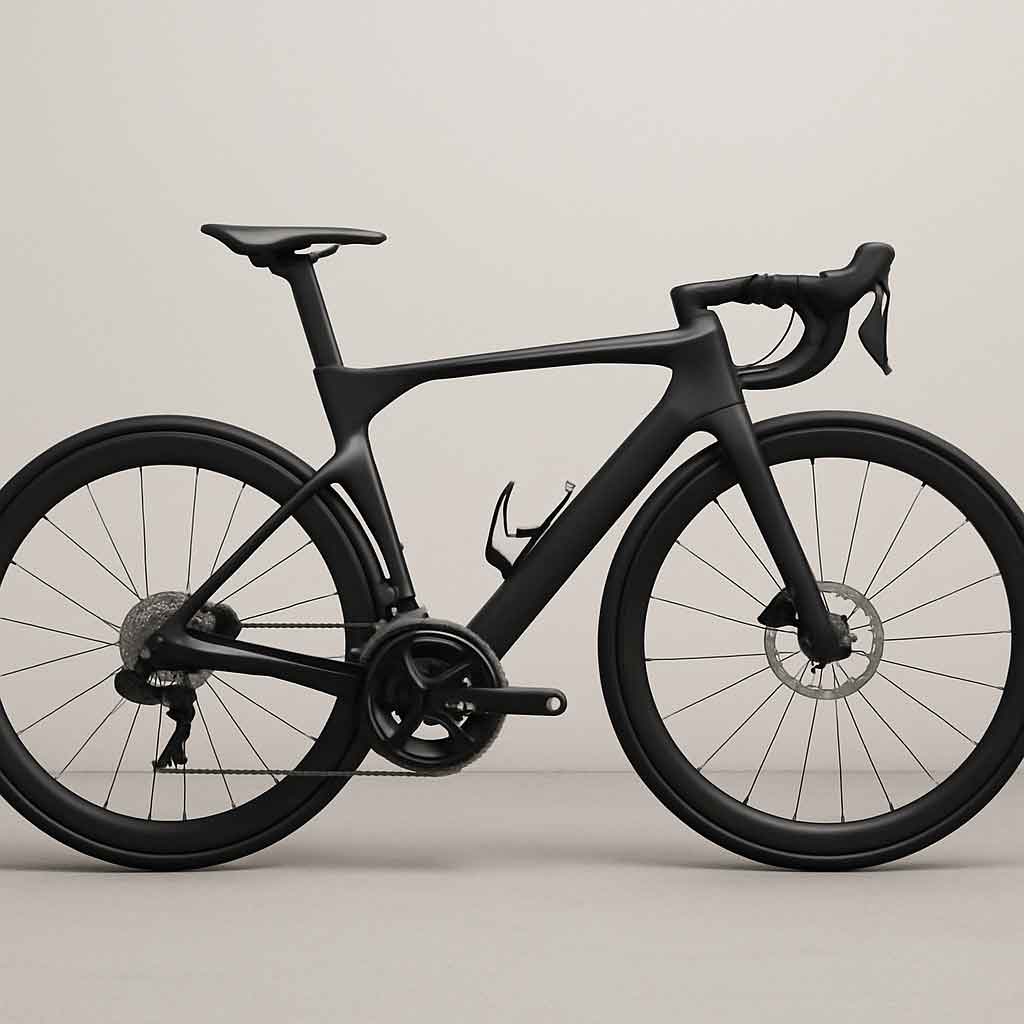

Walk into any bike shop, and you’ll face a confusing puzzle. Two road bikes hang side-by-side, looking almost identical, yet one has a price tag of $1,000 while the other is $6,000. The price gap seems impossible, leaving most of us wondering what we're actually paying for. A massive piece of that puzzle lies hidden in the bike’s very skeleton.
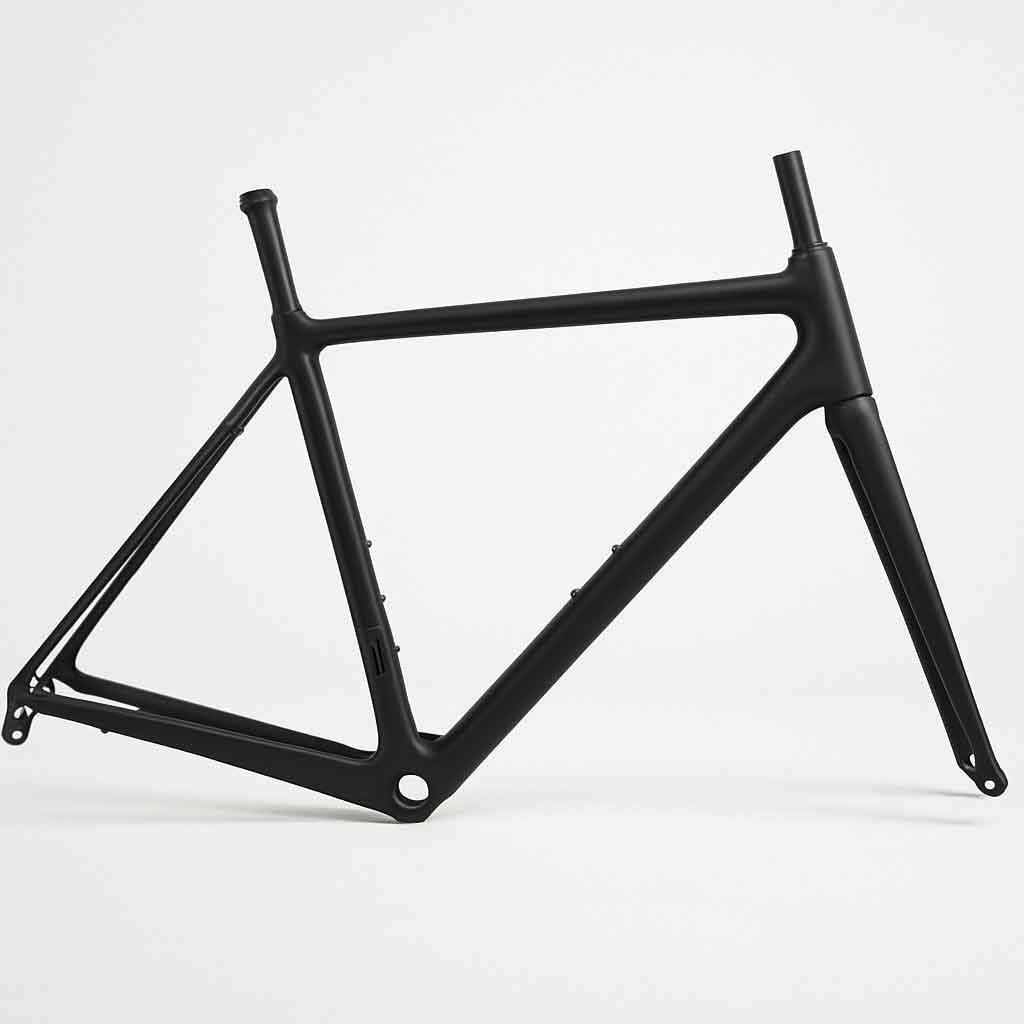
This skeleton is the road bike frame—the core structure that holds the wheels, handlebars, and seat together. Think of it as the foundation of a house; it determines the strength, feel, and overall personality of everything built upon it. That huge price difference often comes down to the material and engineering that go into this single, crucial component.
Your first instinct might be to chase the lightest option available. But in practice, the lightest isn't always the best. A lightweight road bike frame also needs to be strong enough to handle your power without feeling flimsy and comfortable enough that you actually enjoy riding it for more than a few miles. There's a delicate balance between weight, stiffness, and comfort.
This guide demystifies the process of choosing a light road bike chassis by exploring why frame weight matters, breaking down how materials like aluminum and carbon fiber change the ride feel, and providing a clear framework for picking the perfect frame for your budget and goals. You'll gain the confidence to make a smart choice, not just an expensive one.
What Is a Bike Frame and Why Does Its Weight Matter?
Think of a bike frame as its skeleton. It’s the main structure that holds everything else—the wheels, handlebars, and seat—together in the right place. Just like our own skeletons, a frame needs to be strong and supportive, but its design and material play a huge role in how the bike ultimately feels to ride. It’s the heart of the bike’s personality.
But does a few pounds on the frame really make a difference? Absolutely, and you feel it most when you’re fighting gravity. Every time you pedal up a hill, you’re lifting the combined weight of you and your bike. Shaving pounds from the frame means less work for your legs on every climb. Anyone who has carried their bike up a flight of stairs also knows the immediate benefits of upgrading to a lighter bike frame.
Beyond the hills, a lighter frame makes a bike feel more energetic and quick to respond. It’s the difference between running in heavy boots versus light sneakers; the bike just wants to jump forward when you pedal. Some high-performance frames weigh less than a large pineapple, and the benefits of a sub-1kg bicycle frame are tangible, creating a lively, exciting ride that’s simply more fun.
The "Big Three" Frame Materials: Aluminum, Carbon, and Steel Explained
The material used to build the frame is the single biggest factor influencing a bike’s weight, price, and overall personality. While you might see exotic options, nearly every road bike you'll encounter is built from one of three core materials.
To simplify the options, think of them as characters you might choose in a game, each with unique strengths:
- Aluminum: The reliable and affordable workhorse.
- Carbon Fiber: The high-performance, tunable superstar.
- Steel: The classic, smooth-riding veteran.
Your first "serious" road bike will likely have a lightweight aluminum road frame, and for good reason—it offers fantastic performance without breaking the bank. As prices climb, you enter the world of the carbon bike frame. This is the top choice for racers and enthusiasts because it’s incredibly light and can be engineered for both comfort and power, though this advanced engineering comes at a cost. Steel, while heavier than the other two, is beloved for its durability and uniquely smooth ride that seems to soak up road buzz.
Ultimately, the best road bike frame material depends entirely on your budget and what you want from your ride. A frame can be feather-light, but if it's flimsy, it will feel like you're pedaling a wet noodle.
The "Wet Noodle" Problem: Why a Stiff Frame Is as Important as a Light One
That "wet noodle" feeling is the enemy of an efficient cyclist. This highlights a crucial concept that works hand-in-hand with weight: stiffness. In simple terms, stiffness is how well the frame resists bending and twisting when you stomp on the pedals. Imagine trying to push something with a cooked noodle—it just bends and goes nowhere. A stiff frame, by contrast, is like pushing with a solid stick; it doesn’t give, so all your effort goes exactly where you want it to.
This resistance to bending allows for good power transfer. When a frame is stiff, every bit of force you put into the pedals gets transferred through the bike and into the road, pushing you forward. A flexible frame wastes your precious energy as it twists from side to side. It’s the difference between running on firm pavement versus running on energy-sapping sand. This is why a racing bike frame, for example, must be incredibly stiff to be competitive.
The ultimate goal for engineers is to find the sweet spot that answers the question of what makes a bike frame stiff yet light. The best designs deliver an excellent road frame stiffness to weight ratio, giving you that snappy, responsive feel without adding extra pounds. But there’s a catch: if a frame is perfectly rigid everywhere, it will feel harsh and transfer every single road vibration straight into your body.
Beyond Stiffness: How a Frame's "Comfort" Can Save Your Body
A perfectly stiff frame sounds great for putting power to the pavement, but there’s a downside: you feel every single crack, pebble, and imperfection in the road. This introduces the other side of the coin, a quality often called compliance, or more simply, road bike frame comfort. Think of it like a car's suspension. A race car is brutally stiff to handle corners at high speed, but it's not a pleasant ride. A luxury sedan, on the other hand, glides over bumps. A compliant frame is designed to act more like that luxury car, flexing just enough in the right places to absorb road vibrations before they reach your body.
The reason this matters comes down to one word: fatigue. Those constant small vibrations, or "road buzz," travel up through the frame and into your hands, arms, and back. Over a long ride, this steady shaking is incredibly tiring. A frame with good compliance acts as a filter, dampening that buzz and leaving you feeling fresher and less beat-up after hours in the saddle. This is often the key difference between bikes designed for all-day endurance and pure climbing bikes, where stiffness is king.
This presents a classic engineering tug-of-war. How can a frame be a stiff, efficient tool for transferring power while also being a comfortable, vibration-absorbing machine? For a long time, designers had to choose, and finding the best road bike frame material for climbing often meant accepting a punishingly harsh ride. A material that could be engineered to be stiff where needed and compliant where not would be a game-changer.
Carbon Fiber's Magic Trick: Stiff and Comfortable at the Same Time?
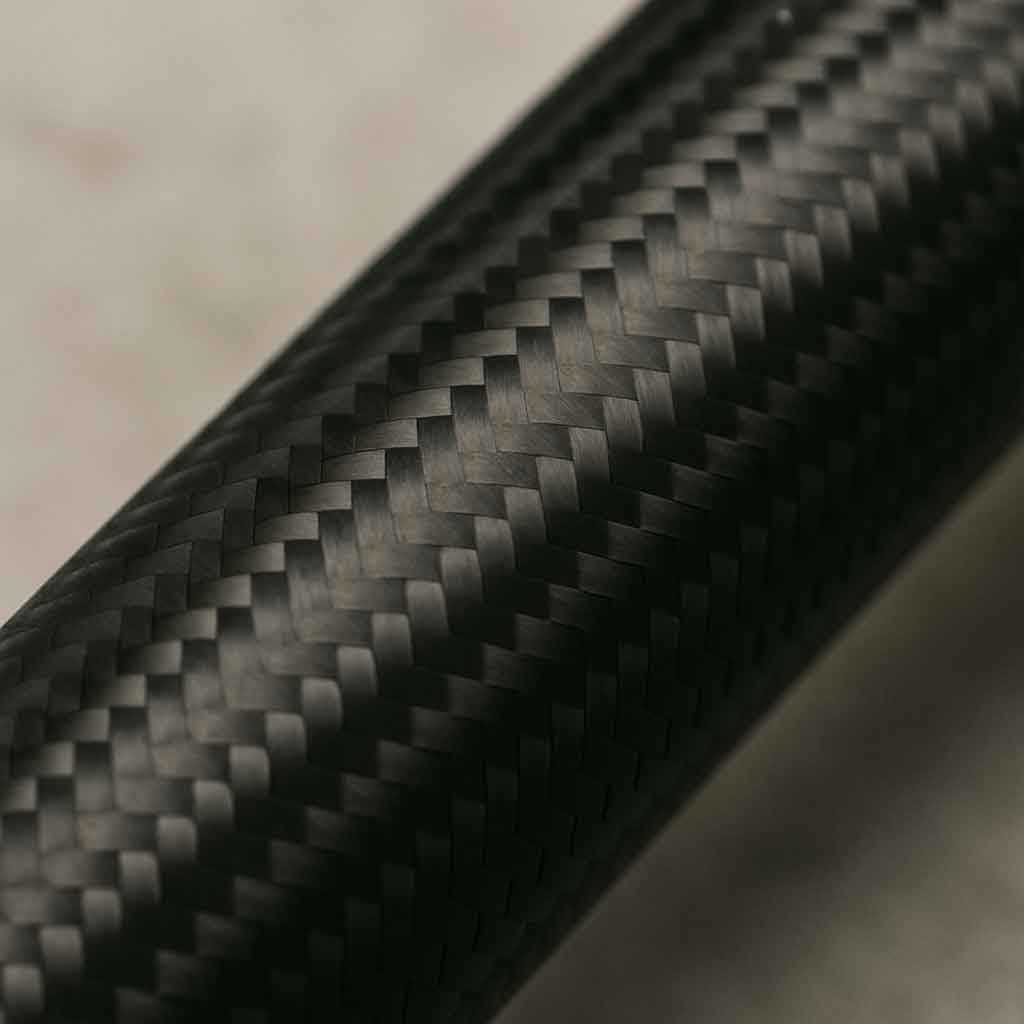
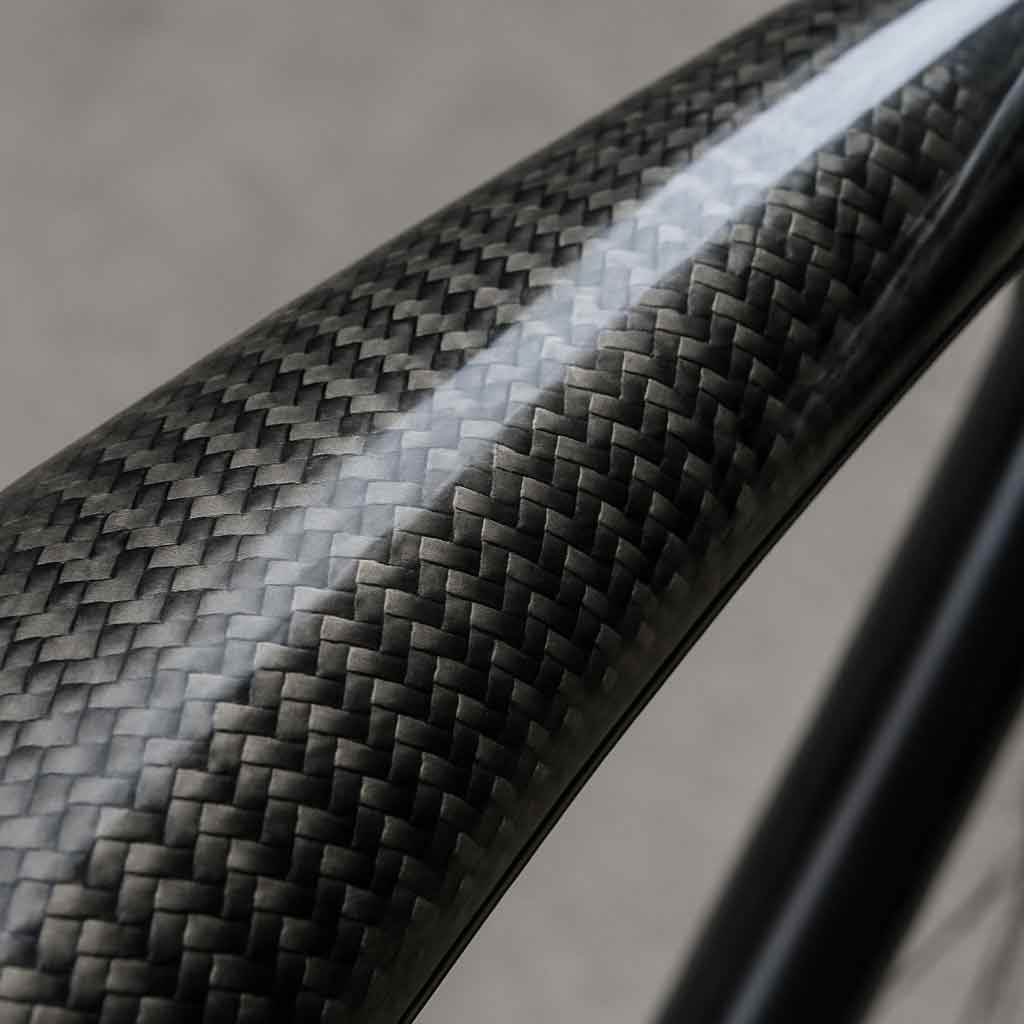
The seemingly impossible goal—a frame that’s both a rock-solid power platform and a smooth, comfortable ride—is where carbon fiber enters the picture. Unlike metals like aluminum or steel, which are uniform in all directions, carbon fiber is a composite material. Think of it less like a solid chunk of metal and more like a high-tech fabric. The weave of the carbon sheets is sometimes visible just beneath the surface of a frame.
This ability to direct the fibers is the secret. Imagine a piece of wood: it’s incredibly strong along the grain but splits easily across it. Engineers use this same principle, layering the carbon "fabric" so the fibers run in the direction that best resists pedaling forces—making the frame stiff and efficient where power is applied. In other areas, like the tubes connecting to your seat, they can orient the layers to allow for a small amount of vertical flex, absorbing road buzz before it reaches you. This is precisely what makes a bike frame stiff yet light and comfortable at the same time.
This meticulous, labor-intensive process of "tuning" the frame's ride feel is why the cost of a high-performance carbon frame is significantly higher. It’s not just about the raw material, but the hundreds of individual carbon pieces and the expertise required to assemble them perfectly. While other premium materials like titanium also offer a fantastic ride quality (a carbon fiber vs titanium bike frame weight comparison often shows them neck-and-neck), only carbon offers this level of directional tuning.
Is a Lighter Bike Frame Really Faster? Weight vs. Aerodynamics
Is a lighter bike frame actually faster? It depends. When you're cycling, you’re fighting two main invisible forces: gravity and wind resistance. A lighter frame gives you a direct, noticeable advantage against gravity. Every ounce you don't have to haul upward makes a difference, making it easier and quicker to pedal up hills. On a steep climb, less weight absolutely means more speed for the same effort.
But gravity isn’t your only opponent. On flat roads or descents where your speed increases, wind resistance becomes the bigger enemy. This is where aerodynamics—how efficiently your bike cuts through the air—takes center stage. Think about sticking your hand out of a moving car's window: a flat palm gets pushed back hard, while a vertical "knife-edge" hand slices through easily. An aerodynamic frame is shaped more like that knife-edge, saving you energy against the wind.
This creates a fascinating design trade-off at the heart of the aero frame vs lightweight climbing frame debate. In fact, professional road racing has a UCI minimum bike weight rule of 6.8 kg (about 15 pounds). This prevents teams from building dangerously fragile bikes and proves that even for the world's best riders, there's a point where balancing weight with aerodynamics, stiffness, and safety is more important than just shedding grams. The goal isn't just the lightest bike, but the fastest and most efficient one for the situation.
Final Decision: Which Lightweight Frame is Right for You?
Choosing the right frame doesn't require you to be an expert. The secret is to simply match the frame’s strengths to your personal goals. Instead of getting lost in technical specifications, ask yourself: “What kind of riding will I do most often?” Your answer points directly to the right material and the right balance of features, ensuring you don’t overpay for performance you won’t use.
Here’s a simple guide to get you started:
- For Fitness & Commuting: An aluminum frame offers the best value. It's lightweight, durable, and provides a lively, responsive feel without the high cost, making it perfect for everyday rides and building fitness.
- For Long Rides & All-Around Performance: Upgrading to a lighter bike frame made of entry-level carbon fiber is a fantastic choice. It will noticeably dampen road vibrations, keeping you comfortable for longer and making the bike feel energetic and efficient.
- For Racing & Maximum Climbing Speed: A high-end, lightweight carbon frame is the ultimate choice. This is the best road bike frame material for climbing, delivering maximum stiffness and minimal weight so every ounce of your effort turns into speed.
Remember, the goal isn't necessarily to buy the lightest bike on the market, but the one that’s right for you. A great frame should inspire confidence and make you excited to get out and ride. It’s the foundation of a bike you’ll love for years to come.